Best Fruit Trees to Grow in Albuquerque: Choosing for Your Yard
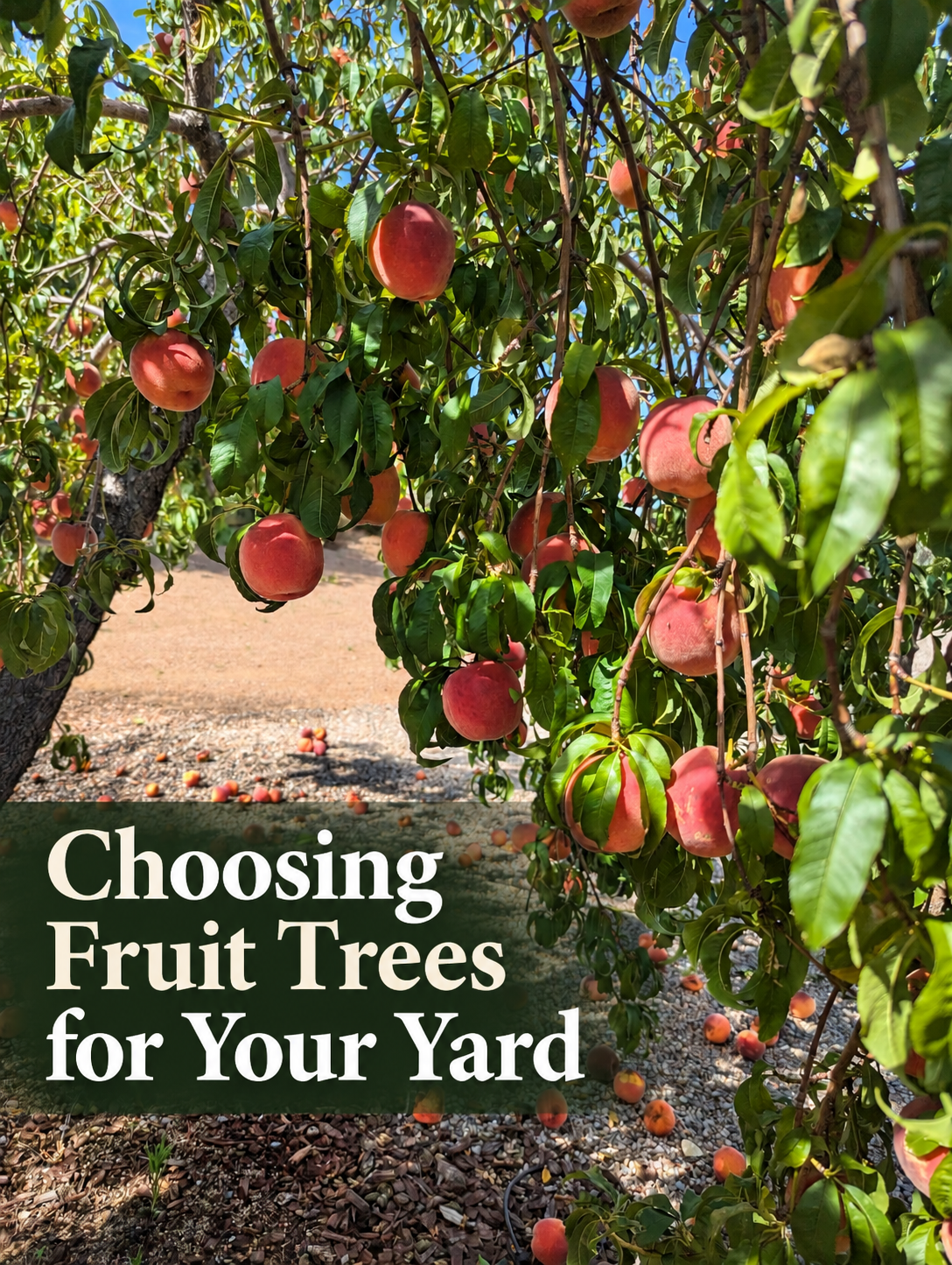
Albuquerque can be a wonderful place to grow fruit trees, but the best choice is not simply the tree with the most appealing fruit. Before choosing a variety, I look at whether the yard can give that tree the sunlight and water it needs. Then we can talk about which fruits you would enjoy growing and how to fit several productive trees into the space you have.
First, is your yard a good place for fruit trees?
Space is not always the first question. A small yard may still have room for a thoughtfully chosen fruit tree. The more immediate questions are whether there is enough direct sun and a practical way to water it.
Sunlight
Most of the fruit trees we recommend are grown for a dependable harvest, so I look for a planting spot that receives at least eight hours of direct sunlight during the growing season. Albuquerque usually has abundant sunshine, but that does not mean every part of every yard gets full sun. Mature oak trees, a neighbor's home, walls, and other structures can shade an otherwise promising spot for much of the day.
Some trees can grow with less sun, but growing a tree and getting a satisfying fruit crop are different goals. Before we settle on a location, we look at the sunlight the tree will receive where it will actually be planted.
Water access
Fruit trees also need a dependable water source, especially while they are getting established. You do not necessarily need an elaborate underground irrigation system to begin. For many Albuquerque yards, we recommend keeping it simple: an above-ground drip irrigation system connected to a standard house spigot, often with a programmable hose-end timer. It is typically a cost-effective way to deliver water where the tree needs it and make watering easier to manage.
During a site assessment, we look for an accessible water source and a sensible route from that source to the proposed planting area.
Choose the variety, not just the type of fruit
Two peach trees—or two apple trees—may bloom at different times. That matters in Albuquerque, where spring frosts can be unpredictable. I've experienced frost close to Mother's Day and even later. If blossoms or newly formed fruit freeze, that year's harvest can disappear even when the tree itself remains healthy.
When researching a tree, check the specific variety's bloom time, not just whether its type of fruit grows in New Mexico. All else being equal, I generally favor later-blooming varieties because they have a better chance of avoiding a damaging spring frost. Bloom time cannot guarantee a harvest, but it is a key question to ask before buying.
How big should a home fruit tree get?
When people picture a fruit tree, they often imagine letting it grow to its full natural size. That can make sense if you specifically want a large shade tree that also bears fruit. For most home orchards, though, I recommend a different goal: keep the fruit within comfortable reach. Fruit trees are usually more useful to a gardener when they are managed for harvesting rather than grown primarily for shade.
That approach starts when the tree is planted. It can look a little barbaric to cut back a new tree, but early training is far easier than trying to shrink a mature one. Depending on the species, rootstock, and form of the nursery tree, we may make the initial heading cut quite low—sometimes around knee height. From there, we guide the new branches into a low, open structure so much of the fruiting wood develops around waist or chest height. The exact cuts differ by tree; a peach and an apple should not automatically be pruned the same way.
Keeping a tree compact makes pruning, protecting, and harvesting the fruit easier and can reduce the need for a ladder. It also opens up a more exciting design choice: several smaller trees can sometimes fit in the space that one full-size tree would occupy. That takes deliberate spacing, variety and rootstock selection, and ongoing pruning, but it can give you a wider range of fruit from the same yard.
For example, rather than devoting a large area to one peach tree, you might grow a yellow peach, a white peach, and one or two cherries within a carefully planned small orchard. This variety also gives you a measure of resilience. Late frost, an off year, or a tree that is not ready to bear can leave you without a crop from one tree. Other trees may still produce. Of course, a severe frost can affect several trees at once, so planting more trees is a buffer, not a guarantee.
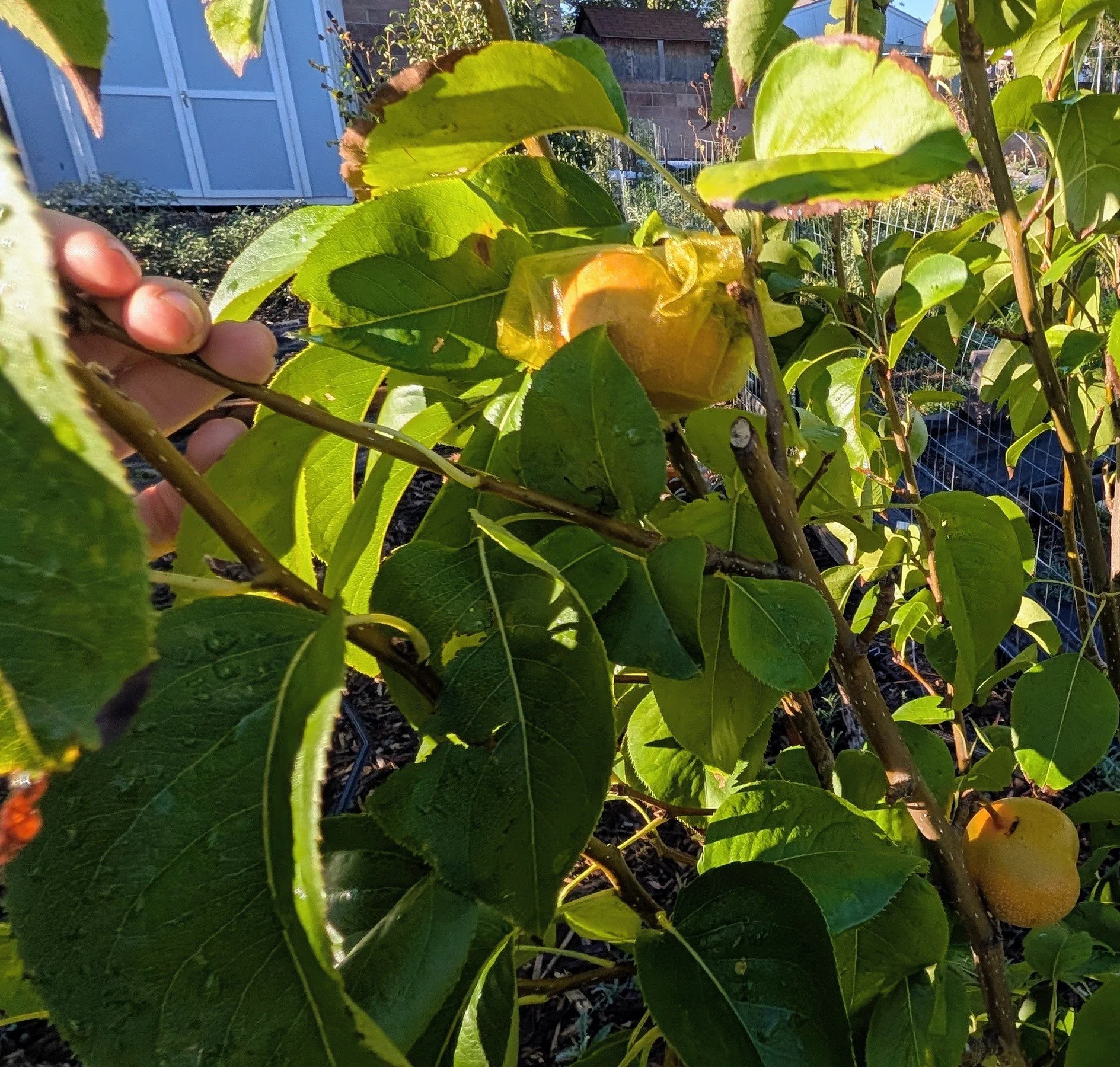
Notice the Korean Pears, easily accessible without a ladder. This is due to thoughtful pruning as soon as the tree was planted.
Which kinds of fruit trees can grow here?
Many familiar deciduous fruit trees—trees that drop their leaves in winter—can be good candidates for an Albuquerque yard when the variety and planting site are chosen carefully. That includes stone fruits such as peaches, plums, apricots, and cherries, as well as apples and pears, which belong to a group called pome fruits.
I have enjoyed experimenting with these trees in my own yard. I currently grow two varieties each of apples, apricots, pears, peaches, and cherries. They are a reminder that a home orchard does not have to be built around just one kind of fruit.
These are all worth considering, but a tree that grows well will not necessarily produce a full crop every year. Some fruit trees also need a compatible second variety nearby for pollination, so that is something to check before planting.
I have also seen clients have success with persimmons and cold-hardy pomegranates. Figs can be another exciting option, but they deserve special consideration in our climate.
A special case: growing figs in Albuquerque
Albuquerque is near the cold edge of where many figs can grow outdoors reliably. A hard winter may kill the branches above ground, making the plant look dead. If the roots survive, however, a fig can send up new shoots in spring. That regrowth is encouraging, although a fig that has to start over from the ground may produce less fruit that year—or none at all.
That is why we pay close attention to microclimate when placing a fig. One of our favorite possibilities is a sunny spot near a south-facing wall. The wall receives winter sunlight and can absorb warmth during the day, releasing some of that heat as temperatures fall at night. It can also offer shelter from wind. A sunny corner can be especially useful when it protects the fig from harsh Albuquerque winds without casting significant shade over it.
The goal is to give the fig plenty of light, warmth, and protection while leaving it room to grow. In colder or more exposed locations, additional winter protection may still be needed. A well-situated fig that makes it through winter with its established branches intact has a much better chance of producing a generous harvest. After a few years, one productive tree can potentially give you hundreds of dollars' worth of fresh figs in a favorable season—plus the pleasure of picking fruit from your own yard.
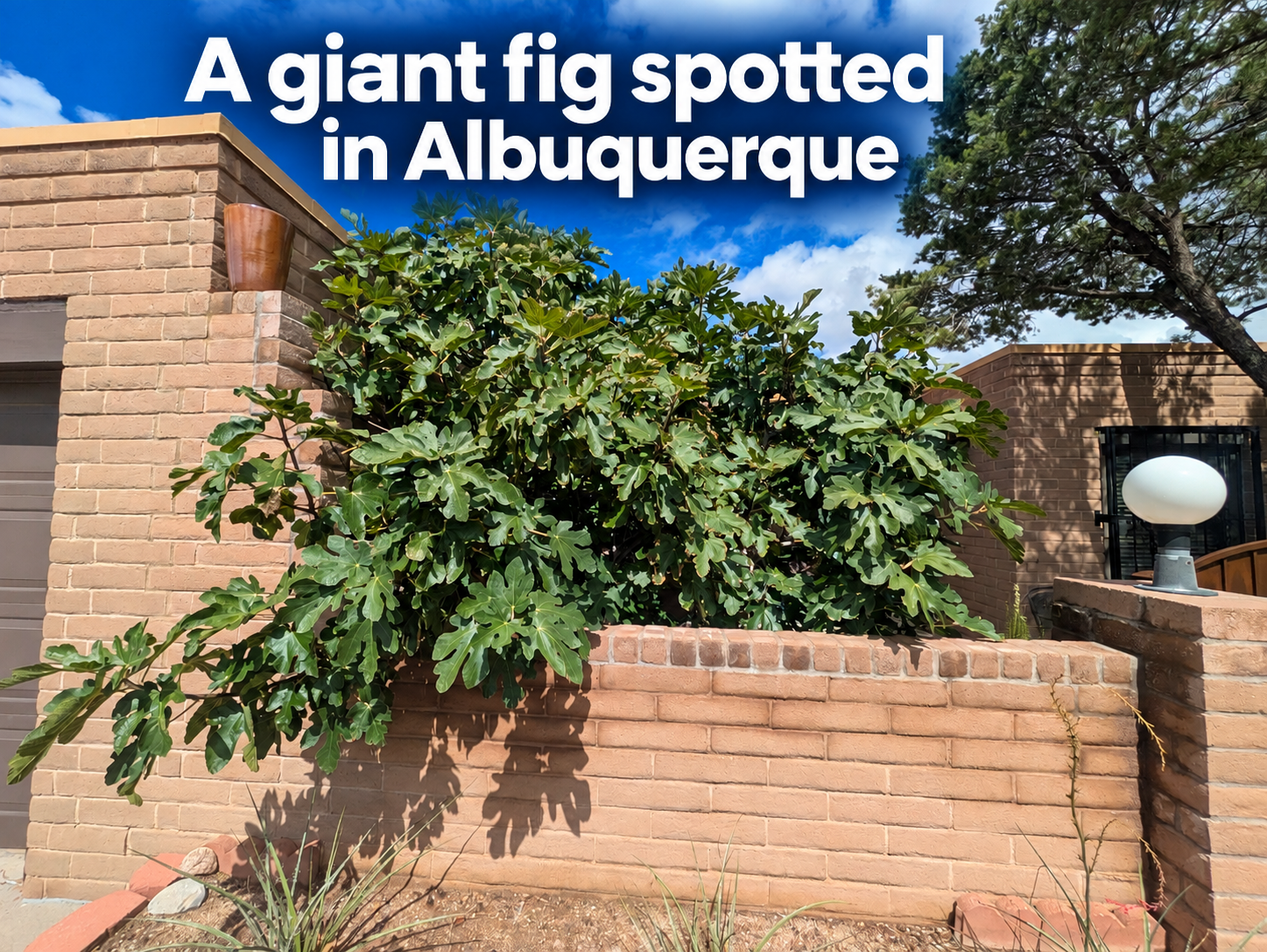
This fig has at least a hundred pounds of fresh figs still on the tree - from just ONE fig tree.
So which fruit tree is best for your yard?
There is no single answer for every Albuquerque property. We start with the practical questions: How much direct sun does the planting area receive? Where will the water come from? How much space can the tree occupy after years of growth? Which fruits will your household actually enjoy harvesting? From there, we can choose suitable varieties and a training plan that makes the orchard useful—not just attractive on planting day.
At ABQ Foodscaping Co., we design and install edible landscapes with the years after installation in mind. If you are considering a fruit tree or a small home orchard, contact us to schedule a Site Assessment. We can help you choose the right location, plan irrigation, and create an orchard you can comfortably care for and harvest.
